


Last updated: November 15, 2026
A bowing basement wall can be monitored only while it stays stable. If the wall keeps moving, cracks widen, or doors and floors above start changing, monitoring stops being enough and a foundation contractor should look at it.
Key takeaways
- A monitored wall is a wall you are checking for change, not a wall you are ignoring.
- The main job is to track movement with the same tools and the same reference points each time.
- Small changes over a short span matter more than the size of the visible bow alone.
- If the wall shifts between checks, or if new signs show up, waiting longer is the wrong move.
- Monitoring is a bridge, not a cure, so it should have a clear end point.
How long can a bowing basement wall be monitored?
A bowing basement wall can be monitored for a short period when it is not getting worse, but there is no safe blanket timeline that fits every basement wall. The real question is not “how many months can I wait?” but “is the wall staying stable from one check to the next?”
That matters because bowing is a movement problem. A wall that is unchanged over several checks is a different case from a wall that keeps shifting a little at a time. Monitoring is only reasonable when you can compare one reading to the next and see no meaningful change.
A good rule is to treat monitoring as temporary. It should have a start date, a repeat check date, and a decision point. If the wall is still moving after that, the waiting period has done its job: it has shown that repair planning should move ahead.
This page is the bridge between discovery and action. If your goal is preventing basement walls from bowing in the first place, the hub on how to prevent basement walls from bowing belongs next in your reading list. If the wall is already in motion, the question is not how long you can hope it holds. The question is how long it stays the same.
What counts as stable during monitoring?
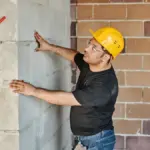
Stable means the wall looks the same on repeated checks with a camera, level, or plumb line, and the same marks line up the same way each time. If the reference points drift, the wall is no longer just being watched.
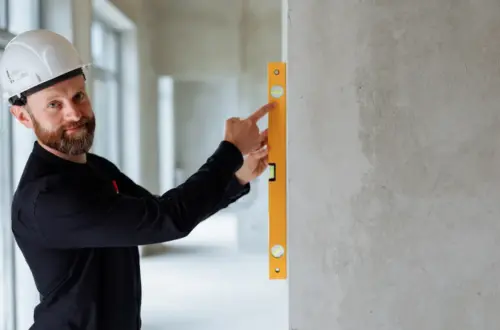
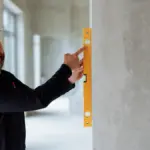
A camera helps with dated photos. A level helps show whether a line that was straight still looks the same. A plumb line gives you a simple vertical reference that is easy to repeat. The point is not to build a lab. The point is to make the next check comparable to the last one.
Use the same spots on the wall each time. Put the same tape marks back in place. Photograph the same corner, crack, or joint from the same distance if you can. If the wall is stable, the record should look boring. That is the goal.
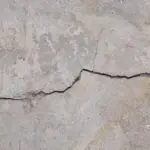
A wall can still be a concern even if it is not changing fast. A long bow, a wide crack, or water stains can all raise the risk level. But for the purpose of monitoring, the key sign is repeated movement. If the shape is changing, the monitoring period is already running out.
How should I monitor a bowing basement wall?
Monitor a bowing basement wall by setting a baseline, rechecking on a set schedule, and stopping the watch if the wall changes. The process is simple, but the discipline matters.
- Pick three to five fixed points on the wall. Use the same crack ends, block joints, or wall sections each time so the comparison is real, not guessed.
- Take clear photos with a camera. Date them and keep the same angle if possible, so later images can be compared side by side.
- Check the wall with a level or plumb line. Use the same tool and the same reference spot to see whether the wall still lines up the same way.
- Write down what you see. Note crack length, any change in gap, new stains, loose mortar, or a new curve in the wall.
- Repeat on the same schedule. If the wall is quiet, the record stays quiet. If the wall changes between checks, the monitoring plan has given you the answer.
- Call a foundation contractor if the record shifts. Movement means the wall is no longer a watch-and-wait problem.
The point of this routine is consistency. A photo taken from a different angle, or a level placed in a different spot, can create false comfort. Monitoring only works when the before-and-after comparison is fair.
What changes mean monitoring is no longer enough?
Monitoring is no longer enough when the wall shows change, not just damage. The biggest warning sign is movement between checks, because a moving wall can keep moving.
Watch for a wider bow, a crack that opens more, mortar that starts crumbling, or a line that used to look straight and no longer does. New signs matter too. Fresh water seepage, a new gap at the top or bottom of the wall, or changes in the floor above are all signs that the wall is not sitting still.
This is where many owners make a costly mistake. They see the wall, take one photo, and assume that means they have a safe waiting period. That can cost time, because the wall may already be telling you the repair window is closing. The better move is to treat the first sign of change as a reason to stop extending the schedule.
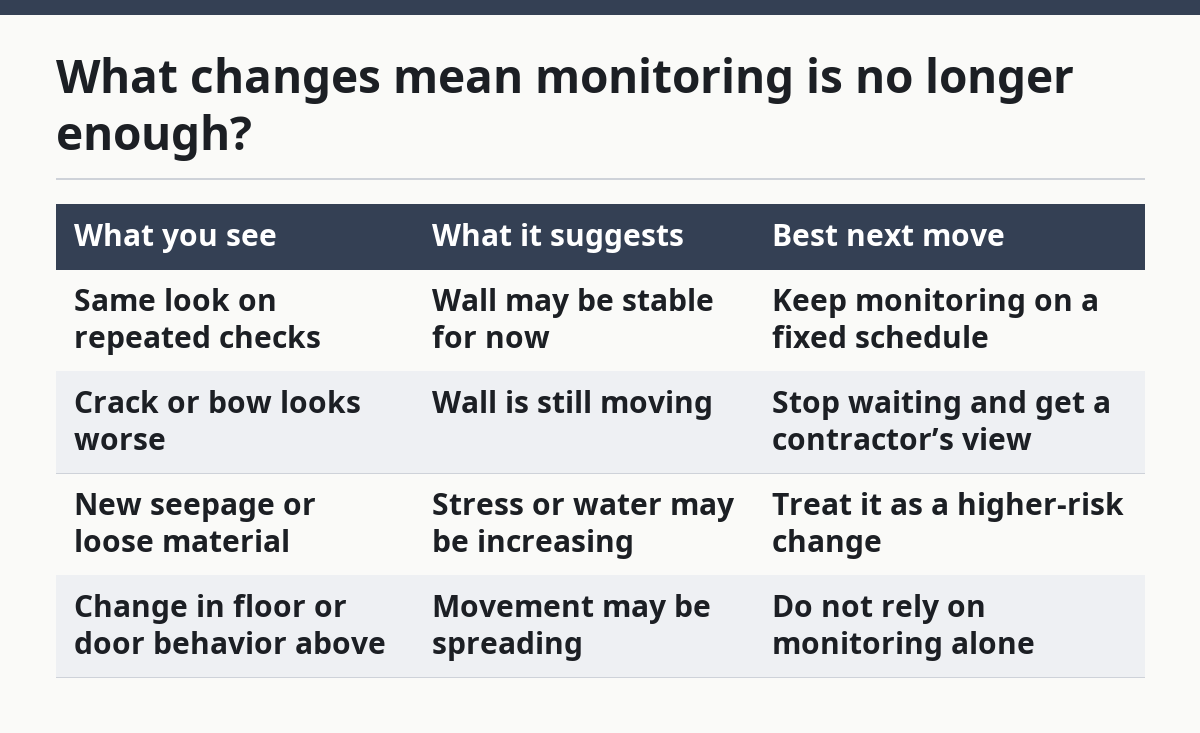
Here is a simple comparison of what each signal usually means during monitoring:
| What you see | What it suggests | Best next move |
|---|---|---|
| Same look on repeated checks | Wall may be stable for now | Keep monitoring on a fixed schedule |
| Crack or bow looks worse | Wall is still moving | Stop waiting and get a contractor’s view |
| New seepage or loose material | Stress or water may be increasing | Treat it as a higher-risk change |
| Change in floor or door behavior above | Movement may be spreading | Do not rely on monitoring alone |
A monitored wall is only worth watching if the watch has a purpose. Once the wall changes, the purpose shifts from observation to action.
When should I stop watching and ask for repair help?
You should stop watching when the wall changes between checks, when new signs show up, or when the monitoring period has already been stretched without a clear result. Waiting longer does not help if the wall is no longer stable.
A foundation contractor is the right next step when the wall is moving, when the bow is no longer just a visual concern, or when the basement wall is part of a larger structural pattern. That includes repeated crack growth, a wall that leans more with time, or a basement that has new water entry along with the bow.
This is also the point where wishful thinking gets expensive. A wall that has already shown movement is not “buying time”; it is spending it. The longer the change continues, the less useful a monitoring-only plan becomes.
Professional help is not the same as repair on the spot. It is a way to decide whether the wall can still be watched or whether the wall has crossed the line into repair planning. If you are unsure, that uncertainty itself is a reason to move faster, not slower.
What mistakes make people wait too long?
The biggest mistake is monitoring without a deadline. A wall can be checked for weeks or months and still drift into a worse condition if nobody decides what change will trigger action.
Another common mistake is using mixed records. One photo from the left, one from the right, one with a tape measure, one without it, and one check in bad light do not give a clean comparison. That can make a wall look calmer than it is. A camera, level, and plumb line used the same way each time are better than a pile of inconsistent notes.
People also wait because the wall “only moved a little.” That is a risky habit. Small movement is still movement, and repeated small changes can matter more than one obvious shift. A wall that changes by a small amount on every check is not stable.
The last mistake is treating temporary bracing as a reason to stop paying attention. Bracing may reduce stress, but it does not erase the need to watch the wall. If bracing is in place, the wall still needs the same careful reinspection timing and the same change threshold.
How long should I recheck it before deciding?
Recheck it often enough to catch change, then decide based on what the wall does, not on how long you hoped to wait. The right interval depends on how active the wall is, but the decision should always be tied to a before-and-after comparison.
If the wall looks quiet, use a repeat check schedule that is fixed and written down. If the wall is active, shorten the interval or end monitoring and move to repair planning. The schedule is only useful if it can prove stability.
A practical way to think about it is this: the first check establishes the baseline, and the next check tests whether the wall has stayed the same. If the second check already shows change, the wall has answered the question for you. If it stays the same, keep checking on the same timeline until you are confident the condition is not shifting.
The mistake is not in watching a wall. The mistake is in watching it without a clear line that says, “if this changes, I stop waiting.” That line should be written down before the first recheck, not after the wall gives you bad news.
FAQ
Can I wait if the crack is small?
A small crack can still belong to a wall that is moving, so size alone is not enough to justify waiting. The safer approach is to watch for change over time with the same camera, level, or plumb line. If the crack stays the same, monitoring may be reasonable for a short period. If it changes, the waiting phase should end.
How often should I check movement?
Check movement on a set schedule that lets you compare one reading with the next. The exact interval matters less than consistency, because random checks do not show a trend. If the wall looks stable, keep the same schedule. If the wall changes, shorten the interval or stop monitoring and get a foundation contractor involved.
What changes mean I should stop monitoring?
Stop monitoring when the bow grows, cracks widen, new water appears, or nearby parts of the basement start changing too. Any clear shift between checks means the wall is no longer stable enough for a watch-and-wait plan. At that point, monitoring has done its job and should give way to repair planning.
Drafted with AI; not yet reviewed by a person.