




Last updated: November 16, 2026
Quick answer: In about 15 minutes, you can check whether gutters, downspouts, and grading are sending water away from the foundation or back toward it. This guide on how to inspect gutters, grading, and downspouts for wall protection shows where to look first and what the results usually mean.
Check the gutters, downspouts, and soil grade first, because site drainage is one of the simplest ways to keep water off a basement wall. If gutters overflow, a downspout dumps water at the footing, or the ground slopes toward the foundation, the wall sees repeated wetting that can feed movement.
Key takeaways
- Start at the roof edge and work down to the soil, because roof water often shows the first fault.
- Look for overflow marks, loose joints, and blocked outlets in gutters before you blame the wall.
- A downspout extension and a splash block only help if they send water well away from the foundation.
- Soil that settles toward the house can pool water against the wall even when the gutters look fine.
- This inspection is a maintenance check, not a fix for a bowed wall; it belongs in the larger plan for preventing basement wall movement. See also how to prevent basement walls from bowing.
What should I check first?
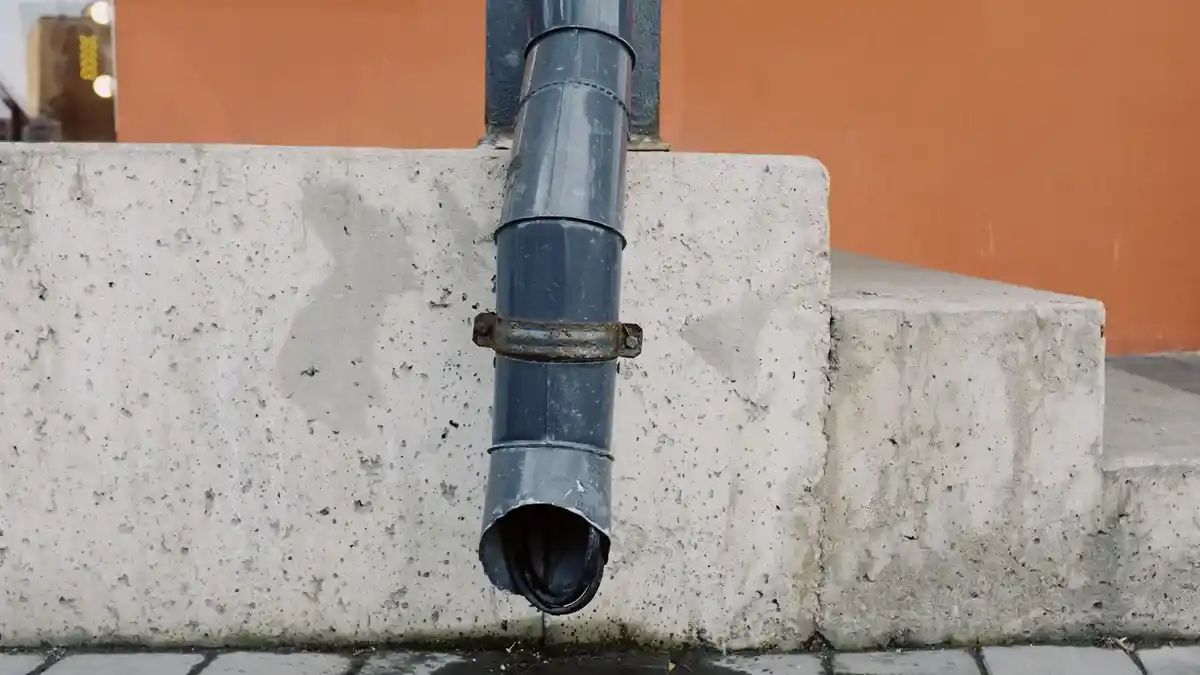
Start with the gutter line, because a clogged gutter can quickly overload site drainage. Walk the full edge of the roof after a rain, or use a hose for about 10 minutes on a dry day, and look for water spilling over the front lip instead of moving to a downspout.
Use this order so nothing gets missed:
- Look at the gutter channels. Check for leaves, shingle grit, sticks, and standing water. Water left in a gutter after rain usually points to a blockage or poor slope.
- Inspect the seams and corners. Open joints, rust spots, and drip marks show where water escapes before it reaches the outlet.
- Check the outlet screens and elbows. A clogged elbow can look fine from the ground but still trap water inside the pipe.
- Follow each downspout to the bottom. Look for crushed sections, disconnected joints, or a pipe that ends too close to the wall.
- Watch the discharge point during flow. The water should not splash back onto the foundation or collect in a shallow basin next to the wall.
A plain visual check can catch most surface problems in under 15 minutes. The point is not to make the gutter spotless; the point is to see whether it moves water without spilling, backing up, or dumping it beside the foundation.
However, the two most common misses are short inspections and dry-day inspections only. A gutter can look clean in sunlight and still overflow in the first hard rain, especially if one elbow is packed tight or one section sags by even a little.
According to the U.S. Environmental Protection Agency, runoff that is not managed away from a home can contribute to moisture problems around the foundation; FEMA also notes that water should be carried away from the structure to reduce damage risk. See the EPA stormwater guidance and FEMA flood guidance.
How do gutters protect the wall?
Gutters protect the wall by keeping roof runoff off the soil next to the foundation. When roof water falls in one place, it can soak the grade, fill low spots, and push water toward basement walls instead of away from them.
A good gutter check focuses on movement, not appearance. The channel should carry water to the downspout without standing water in the run, and the downspout should not leak at the joints or backflow at the top. If the front edge of the gutter shows dark streaks or mud lines, that is a sign water has been spilling over during storms.
Here is a simple comparison of what the inspection usually means:
| What you see | What it likely means | What to do next |
|---|---|---|
| Water spills over the lip in rain | Gutter clog, poor slope, or both | Clear debris and recheck the run |
| Water drips from seams | Loose joint or failed seal | Tighten or reseal the joint |
| Water pools in a gutter after rain | Sag or blockage in the run | Check hangers and clean the channel |
| No water comes out of the downspout | Outlet or elbow blockage | Open the bottom and clear the pipe |
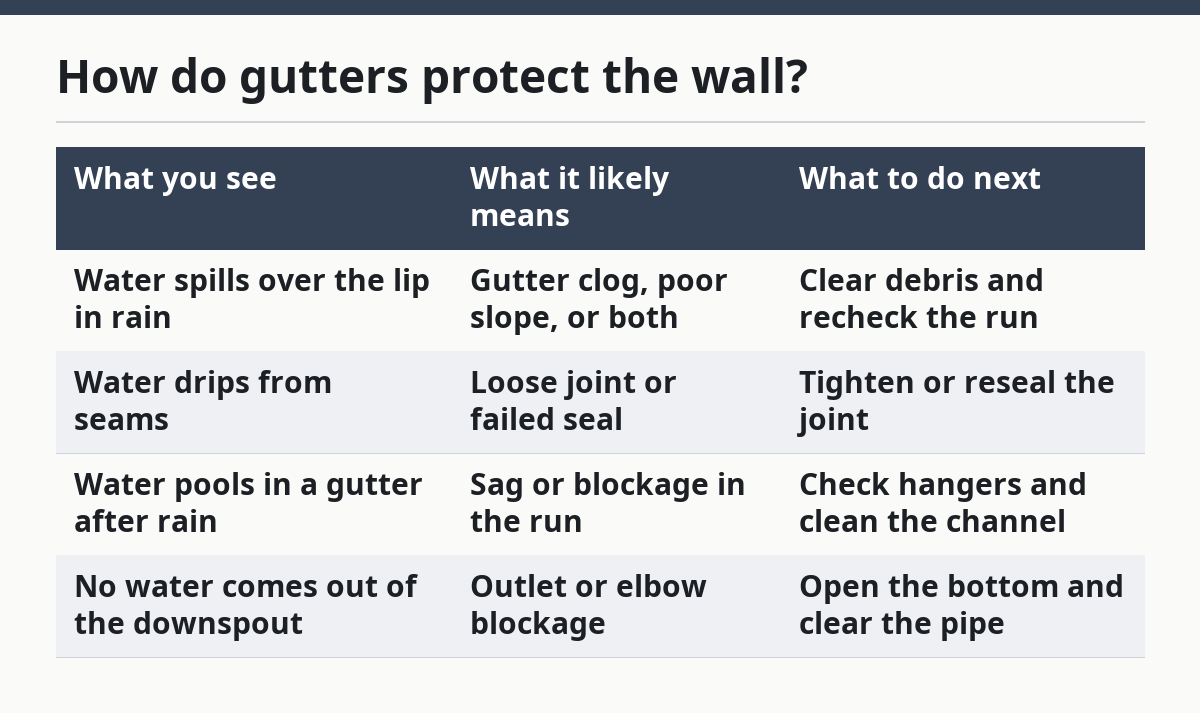
A generic cleanup is not enough if the gutter sags or the outlet is undersized for the roof section. A clean channel that still overflows is a drainage problem, not a leaf problem.
The best clue is often repeat staining, but that clue is only useful when it shows up after several storms. If the same spot shows dirt, mildew, or wash marks after several rains, the gutter is probably shedding water at that point every time it rains. That kind of repeated wetting is what makes the wall see the same load again and again.
How far should the downspout move water?
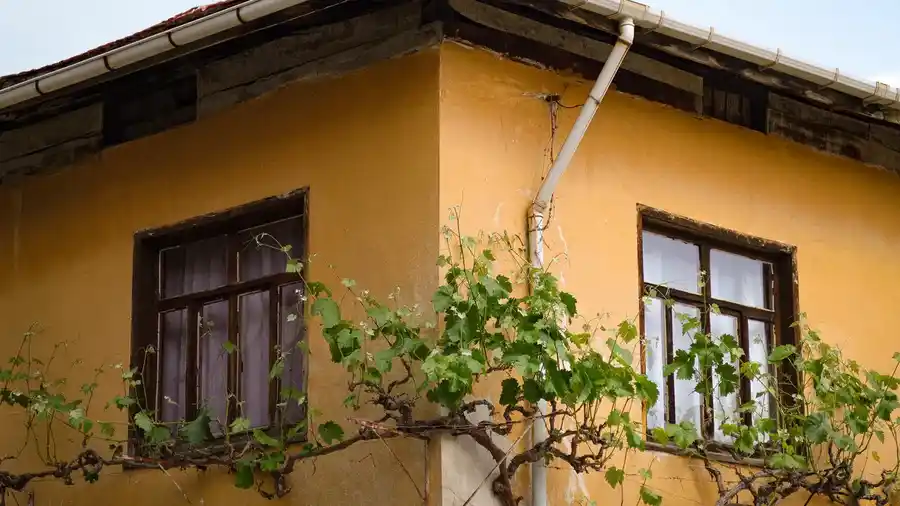
A downspout should move water far enough away that it does not soak the soil beside the foundation, and a downspout extension is the simplest way to do that. If the extension ends right at the wall, the pipe is only moving the problem from the roof edge to the base of the house.
Inspect the bottom of each downspout in two ways. First, make sure the pipe is attached firmly and not leaking at the elbow. Second, trace where the discharge goes after it leaves the pipe. Water should travel away from the wall, not into a depression, flower bed, or path that drains back toward the foundation.
A splash block can help, but only when it is set to push water away from the house and onto a slope that keeps moving. If the block sits flat in a low spot, it can catch water instead of sending it away. That turns a simple accessory into a shallow puddle.
Use this quick check:
- Run water through the downspout for about 1 to 2 minutes.
- Watch whether the stream runs cleanly off the extension or splash block.
- Look for pooling within a few feet of the wall.
- Check the soil after the flow stops. Damp soil right at the foundation means the discharge point is too close or the grade is wrong.
This is the part many people get wrong. They add a downspout extension, then let it end at a place that still drains back toward the house. That does not protect the wall; it just spreads the same water over a wider patch of soil.
For a practical reference, the International Code Council and many local codes require roof drainage to be directed away from foundations. Check local rules before changing discharge routes.
Is the ground sloping the right way?
The ground is sloping the right way when it carries water away from the foundation instead of letting it sit against the wall. Soil grade is as important as the gutter itself, because a perfect downspout cannot fix a yard that slopes back toward the house.
Check the grade with a simple visual test after rain. If water stands along the foundation line, or if you see a wet strip that stays damp longer than the rest of the yard, the grade may be too flat or reversed. A shovel, a string line, or even a straight board can help show whether the soil drops away from the wall or rises toward it.
Look closely at these common trouble spots:
- Along walkways and patios. Hard surfaces can trap runoff and send it to the wall.
- Beside porch steps. Fill soil often settles here and creates a trough.
- Near downspout outlets. The extra water can wash a low channel into the grade.
- At settled backfill. Freshly settled soil often sinks after a few wet seasons.
One practical sign matters more than any guess: surface pooling that stays near the foundation. If you see water standing there after a normal rain, the grade is not doing its job, even if the yard looks level to the eye.
This check is not for a quick cosmetic patch. Adding a thin layer of soil over a low spot may hide the dip for a month, but if the area keeps settling, the water problem comes back. For wall protection, the goal is a consistent slope that moves water away every time.
What mistakes matter most?
The biggest mistakes are blocked gutters, short downspout runs, and ignoring small puddles at the foundation. Each one looks minor on its own, but each one sends more water to the same wall over and over.
Here is what those mistakes cost in practical terms:
- Ignoring a clogged gutter: Water spills over the edge and saturates the soil below the eave.
- Leaving a downspout extension too short: Roof runoff lands too close to the wall and soaks the grade.
- Using a splash block on flat ground: Water slows down and collects instead of moving away.
- Trusting a dry-day look only: The system may fail in rain even if it looks fine in sunlight.
- Missing a low spot in the yard: Surface pooling can keep the foundation wet long after the storm ends.
The fix is usually inspection plus simple correction, not guesswork. Clear the gutter, repair the loose joint, lengthen the extension, or rework the grade where the soil has settled. If the same area keeps wetting up after several rains, the problem is not temporary.
A second mistake is treating all water paths the same. Roof runoff, splash-back from a downspout, and yard drainage are separate flows. If one path fails, the others do not compensate; they often make the same wall see even more water. When the source is unclear, it is safer to consult a drainage or foundation professional and compare the site layout with local guidance.
This is also where the limits matter. A drainage check helps with wall protection, but it is not the same as a full plan for a bowed wall. The site can point water away from the foundation, yet a wall that already moves may still need a separate repair strategy. See also foundation crack repair and basement drainage repair.
What does a good inspection schedule look like?
A good inspection schedule means checking the system at least twice a year and again after a heavy storm. Spring and fall are the easiest times to catch leaves, loose joints, settled grade, and extension problems before they turn into repeated wetting.
Use a simple cycle:
- Spring: Clear winter debris, check elbow joints, and look for grade washout.
- Fall: Remove leaves before they pack into the gutters and outlets.
- After a major rain: Walk the perimeter and look for surface pooling, overflow marks, and splash-back.
- After yard work or snowmelt: Recheck the downspout path and the low spots near the wall.
Because the water path is now clear, the inspection should end with a specific next step. If a gutter stays clean, the downspout carries water away, and the grade keeps the soil dry at the foundation, the wall has a much better chance of staying protected.
How do i know if gutters are failing?
Gutters are failing when they spill, leak, sag, or leave water sitting near the foundation after rain. The clearest signs are overflow at the lip, dirt streaks below seams, and damp soil under the gutter line even when the roof runoff should be moving elsewhere.
Watch for three patterns over 1 or 2 storms. First, water should enter the downspout instead of spilling at the corner. Second, the gutter should not hold standing water between downspouts. Third, the discharge point should not create a puddle or muddy strip next to the wall.
If you see overflow in the same spot more than once, treat that as a real failure, not a one-off. If the pattern keeps repeating, consult a professional so you can confirm whether the issue is clogging, slope, size, or a damaged run. A gutter that only works in light rain is still failing the job of wall protection.
What slope should the ground have?
The ground should slope away from the foundation enough that water does not sit along the wall or run back toward it. If water pools at the base of the house, the slope is not doing its job, no matter how flat the yard may look from a distance.
Check the area with water after rain or with a hose, then watch where the water goes for the next 5 to 10 minutes. If it lingers near the wall, the grade needs correction. A slope that keeps moving water away from the foundation is the goal, not a yard that merely looks even.
How far should downspouts extend?
Downspouts should extend far enough that roof runoff does not soak the soil beside the foundation. If the extension ends in a spot that stays wet, drains back, or forms a small puddle, it is too short for wall protection.
The simplest test is to run water through the downspout and watch the final landing point. If the soil near the wall gets wet, the discharge path still needs work. A splash block can help only when it directs water onto ground that continues away from the house.
Drafted with AI; not yet reviewed by a person.



One comment on “How to inspect gutters, grading, and downspouts for wall protection”