


Last updated: November 16, 2026
Quick answer: maintain a repaired basement wall after stabilization with a monthly 10-minute inspection, water control, and a photo record of any change. How to maintain a repaired basement wall after stabilization comes down to three habits: watch for movement, keep water away from the foundation, and recheck the repair on a schedule. The fix is not “set it and forget it”; the wall still needs simple monitoring, dry conditions, and a quick response if cracks, gaps, or damp spots change.
Key takeaways
- A stabilized wall still needs routine checks because small changes can return.
- Water management matters as much as the structural repair.
- Mark cracks and note dates so you can spot movement, not just surface wear.
- Wall anchors, carbon fiber straps, and steel braces need different follow-up care.
- If the wall changes shape, consult a professional and get it reviewed.
How should I check a repaired basement wall?
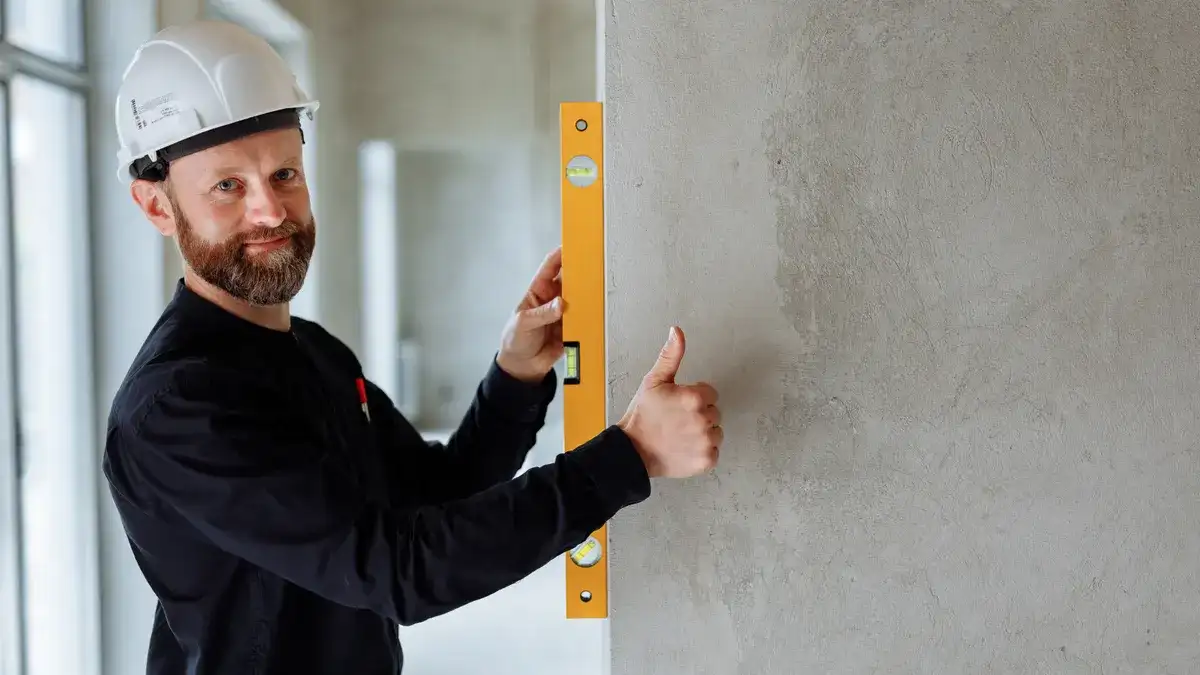
Check a repaired basement wall on a regular schedule by looking for new movement, fresh cracking, and moisture changes. A simple 10-minute inspection is enough for most homeowners if it is done the same way each time.
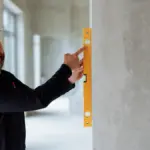
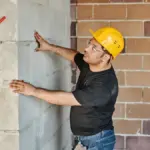
- Use a level to check the wall face. Hold it against the wall at the repaired area and look for any new bowing, gaps, or unevenness compared with the last check.
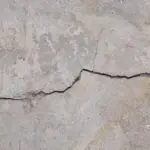
- Use a pencil to mark cracks. Put tiny date marks at the ends of any crack you want to watch, then note whether the line gets longer over the next 30 days.
- Use a flashlight to inspect joints. Shine it across the wall surface so hairline cracks, mortar joints, and seam lines are easier to see than they are in flat light.
- Use a phone camera to record the same angle. Take the same photo from the same spot each time so you can compare changes over 3 months, not just memory.
- Use a notepad to track each visit. Write the date, the spot you checked, and any change in dampness, staining, or crack width.
A repaired wall can look fine for a long time and still shift a little. That is why the record matters more than a single glance. If the wall is stable, the notes stay boring, and boring is what you want.
What moisture control keeps the wall stable?
Because moisture control keeps the wall stable by reducing pressure on the foundation, it limits the conditions that make cracks reopen. This is the part many homeowners miss, because the wall repair and the water problem are not separate problems.
Start with gutters and grading. Clean gutters so they move water away from the roof edge, and make sure soil around the foundation slopes away from the house instead of toward it. Even a repaired wall can take on stress again if water keeps pooling near the basement wall after rain.
Watch for indoor moisture too. A musty smell, damp lower corners, or white powdery staining on masonry can mean water is still entering the space. If humidity stays high, the wall may not fail, but the conditions around it are working against the repair.
For a general moisture reference, the U.S. Environmental Protection Agency has a useful guide on moisture control in buildings: https://www.epa.gov/mold/moisture-control-building-design-construction-and-maintenance. The CDC also notes that dampness and mold can affect indoor spaces, which is another reason to keep basement conditions dry: https://www.cdc.gov/mold-health/about/index.html.
Do not wait for a puddle before acting. A wall that stays damp at the base for days after rain deserves attention, even if it does not look worse yet.
How do I watch cracks and repair marks?
Watch cracks and repair marks by measuring the same spots the same way every time. The goal is to notice change, not to guess from memory whether a line looks “about the same.”
Use a pencil to place small witness marks at both ends of a crack. Add the date beside each mark, then check again after 30 days, after a heavy rain, and again at the next 3-month interval. If the crack length changes, or if a new branch line appears, the wall deserves a closer look.
Do the same with any repair hardware or visible patch line. If you have a wall anchor, carbon fiber strap, or steel brace in view, watch the nearby wall surface for fresh gaps, rust spots, or separations in the masonry. A stable repair should not be pulling away from the wall, changing angle, or showing new staining around the fasteners.
One common mistake is treating old damage as harmless just because it was repaired; if you are unsure whether a mark is changing, consult a professional. The cost of that mistake is time: a slowly changing wall can keep moving while nobody notices. The better move is to compare the same photo, the same date marks, and the same level check every time.
Which repair type needs what care?
Different stabilization methods need different maintenance, even though they all aim to keep the wall from moving. The differences matter because a homeowner may assume every repair behaves the same way after installation.
| Repair type | What to monitor | Maintenance habit | What can go wrong |
|---|---|---|---|
| Wall anchor | Wall alignment near the anchor plate and any gap changes | Check the visible hardware and nearby wall surface at each inspection | Soil or wall movement can show up as new shifting near the plate |
| Carbon fiber strap | Cracks beside the strap and any new separation at the edges | Inspect the full strap line with a flashlight and level | Small wall changes can appear beside the strap instead of on it |
| Steel brace | Rust, loosened contact points, and floor-space changes | Keep the area clear enough to see the brace and its contact points | Corrosion or movement can affect the brace interface |
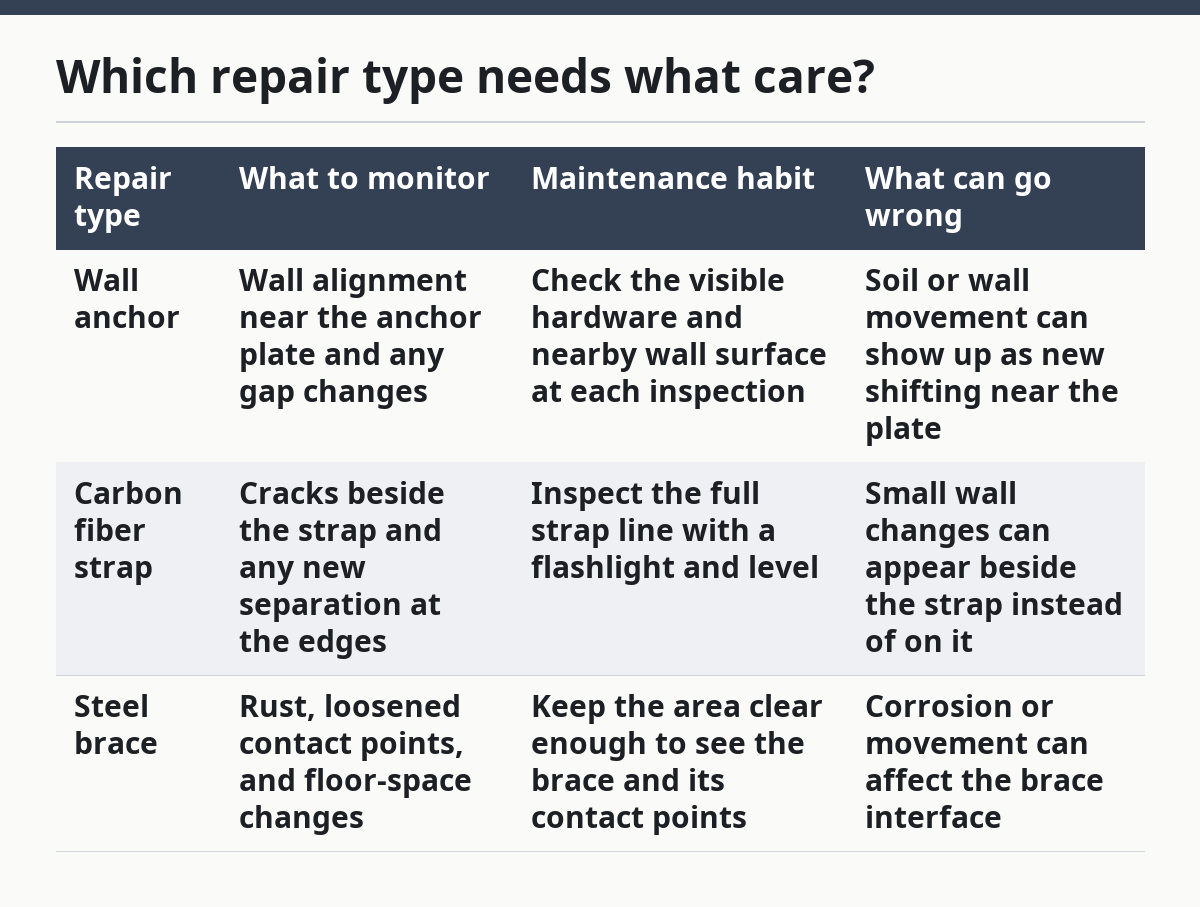
This comparison is useful because it tells you where to look, not just what the part is called. A wall anchor is not maintained the same way as a carbon fiber strap, and a steel brace needs more visual attention around exposed metal. If you do not know which repair is on your wall, look at the visible hardware before you start guessing.
A generic article often skips this difference and tells every homeowner to “inspect the repair.” That is too vague to help. If the wrong spot is watched, the real change can be missed for months.
What routine keeps the basement dry enough?
A dry basement routine keeps the wall safer by reducing repeated wetting around the repaired area. A wall that has been stabilized still lives in the same soil, the same rain pattern, and the same drainage path, so the room around it matters.
Keep stored items a little away from the wall so you can see the lower edge, especially after rain. Leave room for a flashlight and for air movement along the wall surface.
Check the floor line, not just the wall face. Moisture often shows first at the base, in a corner, or along a seam where the wall meets the floor. If that line darkens after a storm and dries out before the next check, note it anyway. Repeated wetting is a pattern, and pattern is what matters.
A practical rule is to inspect after the first heavy rain of the season, then again within 24 hours of any later storm that puts water near the foundation. If the basement has a dehumidifier, empty and service it on a routine schedule so the room does not stay damp.
Do not treat interior paint as proof that the wall is fine; if the finish is hiding a change, consult a professional. Paint can cover a problem for a while, but it does not stop a wall from moving or water from getting in.
When should maintenance stop and a professional review start?
Maintenance should stop and a professional review should start when the wall changes shape, the crack pattern changes, or the moisture pattern gets worse. A stabilized wall is supposed to stay stable; if the signs change, the issue is no longer routine upkeep.
Pay attention to any crack that lengthens after you have already marked it, any repair hardware that looks out of line, or any new separation next to a wall anchor, carbon fiber strap, or steel brace. Also watch for dampness that returns after each rain even when gutters and grading are already being managed. That kind of repeat pattern means the wall deserves a closer structural look.
This is not the page for emergency judgment, and it is not the place to diagnose drainage system design; if you are unsure, consult a professional. It is the page for maintenance after a repair. The line is simple: if the wall is steady, continue the routine; if the wall is changing, the routine is not enough.
For readers working through the larger issue of bowing wall prevention, the hub page on how to prevent basement walls from bowing gives the broader picture. This page stays focused on what to do after the wall has already been stabilized.
What mistakes shorten the life of the repair?
The biggest mistakes are ignoring water, skipping inspections, and hiding the wall behind storage. Those errors shorten the life of the repair because they remove the warning signs that tell you the wall is changing again.
A common mistake is checking the wall only once a year. That saves time, but it also gives you fewer points of comparison, and a wall can shift between visits. Another mistake is assuming no visible crack means no movement. A level check and dated photo tell you more than a quick glance.
A third mistake is letting gutters clog and soil settle away from the house. Even if the repair itself is sound, repeated wet soil can put pressure back on the basement wall. The repair then has to fight the same outside conditions all over again.
One more mistake is covering a repaired area with fresh paint, panels, or storage before you have a baseline record. That hides the signs you need most. Keep the first few months simple: visible wall, clear floor edge, dated photos, and regular notes.
If you want the shortest version of the routine, it is this: check the wall, keep water away, and write down what changes. Everything else supports those three habits.
How often should I inspect a repaired wall?
Inspect a repaired wall on a regular schedule and after any heavy rain that affects the foundation area. A monthly check is a practical habit for most homeowners, with a closer look during the first few months after stabilization. If the wall starts changing, shorten the interval and record the change.
Can repaired walls move again?
Yes, a repaired wall can move again if the soil and moisture conditions keep pushing on it. The repair helps stabilize the wall, but it does not remove the surrounding forces. That is why gutters, grading, and crack monitoring still matter after the fix.
What should I watch after repair?
Watch for new crack growth, damp staining, rust on visible hardware, and any change in wall shape. Also watch the base of the wall after rain, since that is often where moisture shows first. If the same spot changes twice, consult a professional and treat that as a real pattern, not a one-time flaw.
Drafted with AI; not yet reviewed by a person.