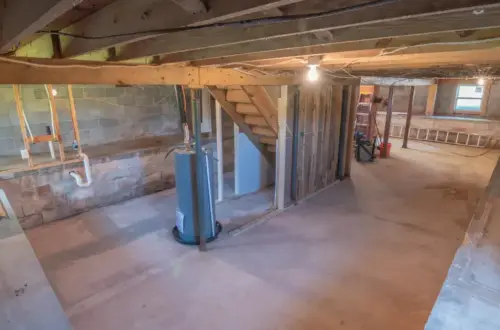







Quick answer: there are 3 main choices here, and the right one depends on how much the wall has moved and whether you can excavate outside. If your basement wall is bowing, wall anchors fit the widest range of active structural problems, carbon fiber straps fit the lightest cases, and steel beams fit the cases that need the most restraint. This guide sorts out how to choose between wall anchors, carbon fiber, and steel beams by wall type, bowing severity, access, and how much room you can lose.
Key Takeaways
- Use wall anchors for active bowing when outside excavation is possible.
- Pick wall anchors when the wall is still moving and the yard allows access.
- Choose carbon fiber for light bowing when you want the least visible interior impact.
- Choose steel beams when the wall needs a stiffer inside brace and you can lose floor space.
Therefore, a wall-repair pro should judge these choices by load path, wall material, and movement—not by the name on the brochure. For technical guidance on structural evaluation, consult a qualified contractor or structural engineer and review the International Code Council and National Association of Home Builders materials alongside site conditions.
Our Top 3 Picks at a Glance
-
1 Best Overall: Wall anchor — best when the wall is still moving and there’s room outside for an anchor plate and rod.
Last updated: November 15, 2026
-
2 Best Budget Pick: Carbon fiber strap — best when the wall is only slightly bowed and you need a low-profile interior fix.
-
3 Best Heavy-Duty / Upgrade Pick: Steel beam — best when the wall needs a stiff interior brace and you can give up floor space.

| Product / Option | Best For | Core Spec | Standout Feature | Action |
|---|---|---|---|---|
| Wall anchor | Active bowing with outside access | Interior rod to buried exterior plate | Can pull a wall back over time | Choose if the yard can be dug |
| Carbon fiber strap | Light bowing in a block wall or poured wall | Low-profile strap bonded inside | Uses very little basement space | Choose if movement is limited |
| Steel beam | Heavier movement or weak walls with no outside dig access | Rigid interior vertical member | Strong restraint at the wall face | Choose if you can spare floor width |
What should you choose first?
Therefore, choose wall anchors first if the wall is still pushing, the soil outside is the likely driver, and the exterior can be excavated. Choose carbon fiber straps first if the bowing is modest and the goal is to stop further movement with almost no loss of room. Choose steel beams first if the interior can tolerate a bulky brace and the wall needs a hard stop, not a thin reinforcement.
Because of that, these are not three versions of the same fix. They solve different problems.
- Wall anchors resist soil pressure from outside and can help pull a wall back.
- Carbon fiber resists inward flex in a thin, interior-only form.
- Steel beams brace the wall from the room side and take up more space.
If the wall is cracked, leaning, or moving year by year, the wrong pick can leave the problem alive behind the repair.
Wall anchors: who they fit and who should skip them
Wall anchors are a strong fit when the wall is still active and there’s enough yard access to install the exterior plate and rod. They make sense for a block wall or poured wall that’s bowing from soil pressure, frost, or drainage trouble outside the foundation.
As a result, they often win on the broadest set of repairs. They are not just a patch on the interior face; they tie the wall back to stable soil farther out in the yard. In many basement jobs, that matters more than anything else.
The downside is not minor. You need exterior excavation, which means landscaping disruption and room for the hardware outside the wall. You also need patience, because the point is restraint and gradual correction, not a quick cosmetic cover.
Who Should Skip This: a homeowner with no usable outdoor access should look at carbon fiber or steel beam instead.
- Buy this if: you have a bowing wall, workable yard access, and want a fix that addresses outside pressure.
- Skip this if: your basement sits tight to a driveway, patio, or neighbor boundary and digging outside is a dealbreaker.
Carbon fiber straps: when low profile wins
However, carbon fiber straps work best when the wall is only lightly bowed and you want the least visual and spatial impact inside the basement. They sit flat against the wall, so they are the cleanest fit for a room that still needs usable square footage.
That makes them a strong match for a poured wall or block wall with limited movement, especially when the goal is to stop additional deflection rather than to tug the wall back. On a finished basement wall, that low profile is a real advantage.
The weakness is just as clear. Carbon fiber does not behave like a jack, and it does not solve severe outward pressure by itself. If the wall keeps moving hard, a strap can be too little, too late. It also depends on sound wall surface preparation and a wall that is still structurally suitable for reinforcement rather than rescue.
According to the International Code Council and many structural repair standards, reinforcement choice should match the wall’s movement and condition, not just the crack pattern. For the drainage side of the decision, consult a professional and review NAHB guidance together with site conditions before choosing a repair.
Who Should Skip This: anyone with serious inward movement, repeated seasonal change, or a wall that is already badly displaced should move to wall anchors or steel beams.
- Buy this if: you need a low-profile interior fix for light bowing and cannot give up floor space.
- Skip this if: your wall is visibly moving fast or already out of plane enough to need stronger restraint.
Steel beams: the answer for stronger interior restraint
Therefore, steel beams are the answer when the wall needs a stiff brace from the inside and the basement can afford the footprint. They are the most obvious choice when you want a firm visual and structural stop along the wall face.
That makes them useful where access outside is poor but the wall still needs a stronger intervention than a strap. A steel beam can be a better fit than carbon fiber when the wall is more than just slightly bowed, because the section can deliver a hard interior check against inward movement.
The trade-off is floor space. Steel beams are not subtle, and they can interfere with storage, finishing plans, and traffic flow in the basement. They are also less discreet than carbon fiber, so they are rarely the first pick in a tight finished room.
The other issue is that a steel beam still works on the room side. If the real problem is saturated soil pushing the wall from outside, the beam may restrain the symptom while the cause stays active.
Who Should Skip This: someone trying to preserve every inch of basement width should look first at carbon fiber.
- Buy this if: you need a stronger interior brace and can accept visible hardware.
- Skip this if: your basement is already tight and you need the wall repair to disappear into the room.
Wall anchors vs carbon fiber vs steel beams: the honest side-by-side
Overall, wall anchors win when the problem is active pressure from outside and the site can tolerate excavation. Carbon fiber wins when the bowing is light and the room cannot spare space. Steel beams win when the wall needs interior support that feels more rigid than a strap but outside access is poor.
| Criteria | Wall anchors | Carbon fiber straps | Steel beams | Winner for this condition |
|---|---|---|---|---|
| Outside excavation needed | Yes | No | No | Carbon fiber or steel beam |
| Interior space lost | Moderate to low inside | Very low | High | Carbon fiber straps |
| Best for active wall movement | Yes | Limited | Moderate | Wall anchors |
| Best for light bowing | Often more than needed | Yes | Sometimes overbuilt | Carbon fiber straps |
| Best for a finished basement | Usually harder to hide | Easiest to hide | Most visible | Carbon fiber straps |
| Best for block wall | Strong fit | Strong fit if movement is light | Strong fit | Wall anchors for active bowing |
| Best for poured wall | Strong fit | Strong fit if movement is light | Strong fit | Depends on access and severity |
| Best when yard access is poor | No | Yes | Yes | Carbon fiber or steel beam |
| Best when you want possible wall pullback | Yes | No | Limited | Wall anchors |
| Best when floor space matters most | No | Yes | No | Carbon fiber straps |
Specifically, the big mistake is picking by price alone. A lighter option that cannot control the wall is not a bargain; it is a delay.
Which option is right for a block wall or a poured wall?
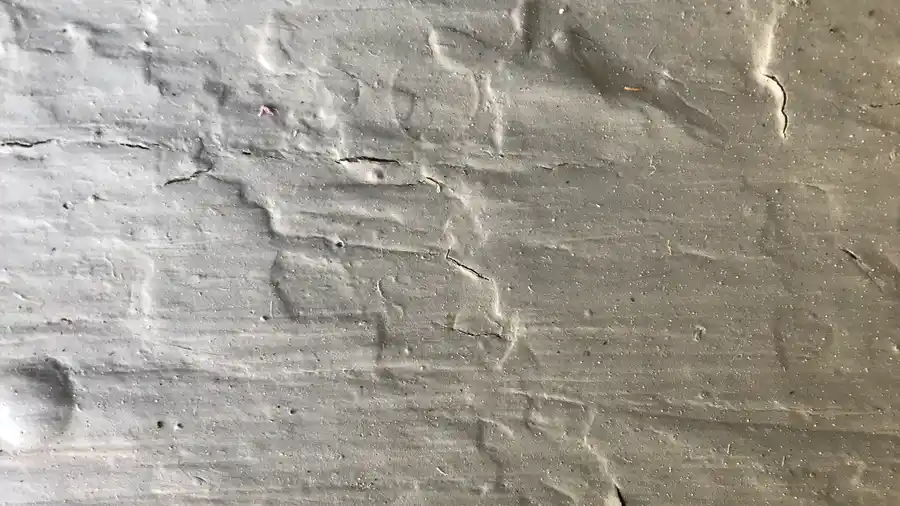
The wall material matters, but it does not decide the answer by itself. A block wall often shows stair-step cracking, open mortar joints, and flex between courses, so it frequently needs a system that addresses movement, not just the crack line. A poured wall can bow as a whole panel, which changes how the fix is anchored or bonded.
Meanwhile, carbon fiber can work on either wall type if the movement is limited and the wall surface is suitable. Wall anchors can work on either wall type when exterior access exists and the pressure is still active. Steel beams can work on either wall type when the basement layout needs an interior brace.
The difference is severity. If the wall is only starting to curve, carbon fiber is often enough. If the wall is still moving under soil load, wall anchors are usually the stronger answer. If the basement cannot support outside digging and the interior needs a more rigid check, steel beams step in.
This is the point where a generic article gets sloppy. It treats the wall material as the main issue. It isn’t. The real decision is wall material plus bowing severity plus access, and a qualified contractor can confirm which combination fits the structure.
When should you choose something else entirely?
Once the wall is badly displaced, the crack pattern is growing fast, or the basement has drainage problems that keep feeding the same load, choose a different path entirely. None of these three methods should be asked to carry a water problem by themselves.
That is especially true when the basement has poor grading, blocked drainage, or repeated wet soil after storms. The repair may still be one of the three options, but the site problem has to be corrected or the wall will keep seeing the same pressure.
A few exception cases flip the overall verdict:
- If there is no outside access and the wall is only lightly bowed, carbon fiber beats the other two.
- If the wall is moving enough that the owner wants the best chance of pullback, wall anchors are the better bet.
- If the basement has very limited space and the wall needs a stronger interior brace than carbon fiber can offer, steel beams are the better bet.
- If water management is the real failure, none of the three is enough alone.
The verdict: which one should you choose?
In short, choose wall anchors if the wall is actively bowing, the yard can be excavated, and the goal is to deal with outside soil pressure. Choose carbon fiber straps if the bowing is light, the wall is still basically stable, and interior space matters most. Neither if the wall is badly shifted, the damage is still spreading, or drainage is ignored.
That is the cleanest call for most readers. Wall anchors solve the widest structural problem. Carbon fiber solves the tightest-space problem. Steel beams sit in the middle as the heavier interior option when the room can give up width.
Which option is best for a block wall?
The best option for a block wall depends on how far the wall has moved and whether the yard can be dug. For a block wall with active bowing, wall anchors are usually the strongest fit because they address soil pressure from outside. For a lightly bowed block wall, carbon fiber can work when the wall is still stable enough for reinforcement rather than correction.
Which option takes the least space?
Carbon fiber straps take the least space. They sit flat against the wall and leave the most usable basement width, which matters in a finished room or narrow mechanical area. Steel beams take the most space, and wall anchors sit outside the basement but still need excavation access.
Can a contractor combine methods?
Yes, a contractor can combine methods. A wall anchor may handle outside pressure while carbon fiber or steel beams help control a weak section inside. That can make sense on mixed-damage walls, but the combination should match the wall’s condition, not just add hardware for comfort.
Drafted with AI; not yet reviewed by a person.