


Last updated: November 15, 2026
Quick Answer: A basic bowing basement wall diagnosis can take 30 to 60 minutes, but a wall that is visibly bowing or changing needs a qualified structural pro to confirm what is moving and why.
Key Takeaways
- A bowing basement wall is a basement wall that curves inward enough to suggest load-related movement.
- A bowed wall is usually diagnosed by measuring shape, mapping cracks, and checking for the pressure source, not by guessing; consult a structural professional if the wall is changing.
- Real movement shows a curve, a crack pattern, or both, and it usually follows the wall’s construction.
- The cause is usually external pressure, most often wet soil pushing against the foundation wall over time.
Bowing basement walls usually mean the wall is being pushed inward by outside pressure, and the first job in Bowing Basement Wall Diagnosis — The Complete Guide is to tell bending from cracking, bulging, or simple surface damage. This guide shows what the signs mean, what to measure, and when the wall needs a structural pro. The sections below settle the difference between a harmless-looking wall and one that is moving for real.
What a bowing basement wall usually means
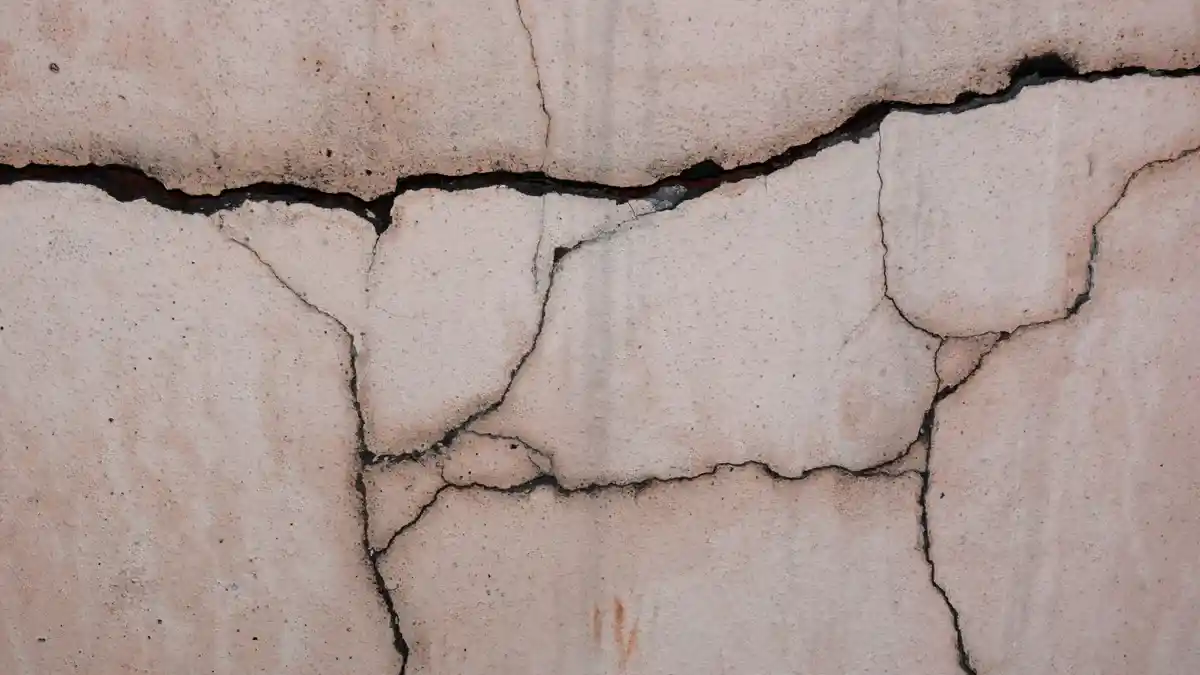
A bowing basement wall means the wall has curved inward enough to show that it is no longer staying flat under load. In plain terms, outside soil and water pressure are often pushing harder than the wall can comfortably resist.
Picture this: you’re in the basement with a flashlight, looking at a wall that seems “a little off,” and you want to know if it’s cosmetic or structural. The answer starts with shape, not paint. A bowed wall is one that curves; a wall with vertical cracks may be cracked but still flat; a wall with bulging may be pushing out in a local spot rather than along its full length.
Here’s the catch: not every inward curve means the same thing. Some concrete block walls bend at the center of a span. Poured concrete can show a long, smooth curve. In both cases, the cause is often lateral soil pressure, which rises when wet soil expands or when drainage fails. FEMA and other foundation guidance stress that drainage and soil pressure are part of the diagnosis, not just the crack itself (FEMA).
A few terms help here:
- Lateral pressure: sideways force from soil, water, or frost.
- Shear crack: a crack that forms when one part of a wall slips relative to another.
- Deflection: the amount a wall moves away from its original plane.
If the wall is already showing wide cracks, a step-like crack pattern in block, or doors and floors that suddenly change, this is not a “wait and see” problem. The wall may still be standing, but the load path has changed.
What this diagnosis is based on
Consult a structural professional if you are unsure, because a safe diagnosis depends on several conditions at once:
- Wall material: poured concrete, concrete block, stone, or brick
- Shape of movement: curve, bulge, lean, or step shift
- Crack type: horizontal, vertical, diagonal, stair-step
- Moisture pattern: damp spots, efflorescence, staining, seepage
- Supporting structure: joists, sill plate, floor framing, footing
How to inspect a bowed wall step by step
A bowed wall is diagnosed by measuring shape, mapping cracks, and checking for the pressure source, not by looking once and guessing. Use a flashlight, a 6-foot level or straightedge, a tape measure, chalk, and a phone camera, and consult a qualified pro if the wall is visibly moving. The International Code Council and foundation repair guidance both emphasize documenting the condition before repair decisions.
Picture this: you’re standing six feet back from a wall and trying to tell whether it is truly bowed or just badly painted. The right sequence matters because cracks can distract from the actual movement. A wall can look dramatic and still be stable; another can look mild and still be moving in a dangerous way.
Start with the full wall, then move in. The goal is to compare what the wall does at the top, middle, and bottom.
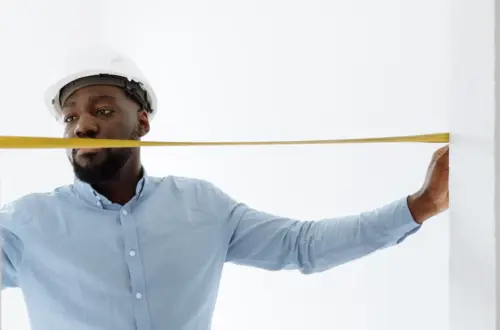
- Measure the wall’s curve across its full height. Hold a straightedge or tight string line across the wall at waist height, then repeat near the top and near the floor. Check the gap in the middle and write it down in inches. A wall that is flat to within a small gap may just be irregular; a wall with a clear inward arc needs closer review. If the gap changes by level, the wall is not uniformly bowed.
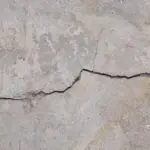
- Mark the crack pattern with dates. Draw the ends of each crack with pencil, then date the marks and photograph them from the same spot. Look for horizontal cracks, stair-step cracks in block, and diagonal cracks near openings. If a crack crosses the same points over time, that is movement. If it stays unchanged for months, it may be old damage, but it still needs context.
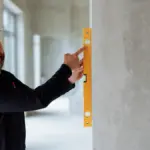
- Check for inward lean at the top and bottom. Put a level on the wall or use a plumb line to compare the wall face with vertical. A wall that is plumb at the bottom but noticeably off at mid-height is behaving differently from a wall that tilts from top to bottom. If the offset is larger at one zone, that zone is taking the load.
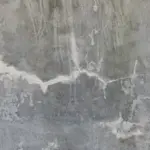
- Inspect the block joints or concrete surface closely. In concrete block, look at the mortar joints for separation, not just the blocks. In poured concrete, look for a long horizontal crack or a line of offset where one side has shifted. If joints are opening on one side and closing on the other, the wall is bending.
- Look for moisture clues outside and inside. Check for downspouts dumping water near the wall, clogged gutters, low spots, and damp soil next to the foundation. Inside, look for damp staining, peeling paint, or wet spots after rain. If water appears after storms, the wall may be under active pressure from saturated soil.
- Check whether floor framing is being affected. Look at the sill plate, joists near the wall, and the rim joist for gaps, nail pops, or separation. If the top of the wall is moving inward, the framing above may show stress too. A wall that is bowed and the framing above that is distorted is not a minor cosmetic issue.
- Compare both ends of the wall. Measure from a fixed point, such as the floor edge or a joist line, at several spots along the wall. A wall that bows in the center but not at the ends often has lateral loading across its span. If one corner is worse, the problem may be tied to a local drainage or footing issue rather than the whole wall length.
- Check for signs that the wall is old damage rather than active movement. Look for old patching, rust stains from past steel reinforcement, and cracks that have been sealed and stayed sealed. If the surface is patched but the wall shape is still curved, the patch hid the crack, not the cause. A repaired crack with a continued bow is not a cured wall; consult a structural professional if the curve remains.
If the wall is already out of plumb by a visible amount, or if the inward curve keeps increasing after heavy rain, the diagnosis points toward active lateral pressure. That is the pattern that matters.
Which wall patterns point to real movement?
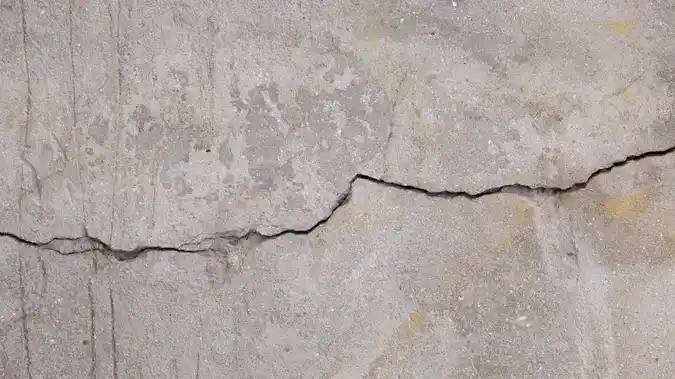
Real movement shows a curve, a crack pattern, or both, and it usually respects the way the wall is built. The material matters because poured concrete and concrete block fail in different ways. The National Association of Home Builders notes that construction method changes how wall distress appears, so the pattern should be read with the wall type in mind (NAHB).
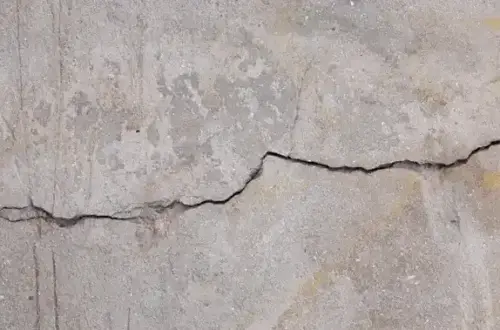
Picture this: you’re staring at a basement wall with one long horizontal crack about mid-height. It may look like “just a crack,” but the shape around it tells the story. The crack is often the release point, while the bow shows that the wall has already been bending.
Common patterns include:
- Poured concrete: a smooth inward curve, sometimes with one or more horizontal cracks.
- Concrete block: stair-step cracks, separated mortar joints, or inward movement at the center of the wall.
- Fieldstone or rubble walls: loose mortar, bulges, and uneven face stones.
- Brick foundation walls: stepped cracking and localized bulging, often near weak spots.
A wall can crack without bowing if the movement is tiny and old. It can bow without a visible crack if the wall has enough thickness to bend before it splits. The point is to read the pattern, not chase one symptom.
The wall’s age matters too. Older foundations were often built with less reinforcement and less drainage control than newer walls. That does not mean every old wall is failing. It means the same amount of pressure may produce more visible movement in an older wall.
Clues that the wall is moving now
- A crack widens after rain.
- A bow is stronger near the middle of the wall span.
- Mortar joints open on one side of a block wall.
- The top of the wall shifts inward more than the bottom.
- Mineral deposits return after being cleaned.
What’s causing the wall to bow?
The cause is usually external pressure, and the most common source is wet soil pushing against the foundation wall over time. Water and soil are the main players; the wall is the part that shows the damage. FEMA guidance on wet basements and foundation drainage points to water control as a first-line issue, not a cosmetic one (FEMA).
Picture this: you’re outside the house after a storm and notice muddy runoff, short downspouts, or a yard that slopes toward the foundation. That scene matters because saturated soil gets heavier and expands, and that extra load does not disappear when the rain stops.
The usual causes are:
- Poor drainage — Gutters overflow, downspouts end too close to the wall, or soil grading sends water toward the foundation.
- Expansive soil — Clay-rich soil swells when wet and shrinks when dry, creating repeated pressure cycles.
- Frost pressure — In cold climates, frozen soil can push against a wall if the foundation lacks enough protection.
- Backfill pressure — If the soil outside was packed too tightly or not drained well, it can exert more force than expected.
- Tree roots and root-related soil movement — Roots can change moisture patterns in the soil and shift load distribution.
- Structural weakness — Thin walls, unreinforced block, and old mortar joints bend more easily.
A wall’s shape helps point to the cause. A bow that gets worse in wet months suggests water pressure. A wall that bows most in one zone may be reacting to a local drainage issue, a buried downspout, or a weak section of wall. A wall with both bowing and settlement signs may have a larger foundation issue.
This is where many generic articles go wrong: they treat all bowed walls as the same problem. They are not. A drainage problem and a structural wall problem can show the same crack, but the repair logic is different. Consult a structural professional if the wall is changing, because diagnosis and repair are not the same decision.
Outside checks that matter
- Downspouts should send water well away from the foundation.
- Soil should slope away from the house.
- Window wells should not hold water.
- Any buried drainage pipe should not be collapsed or clogged.
- The ground should not stay wet against the wall for long periods.
When should a bowed wall stop being a DIY diagnosis?
A bowed wall should stop being a DIY project when the movement is active, the cracks are large, or the wall supports the framing above it. Diagnosis is one thing; deciding on repair is another.
Picture this: you’ve measured the curve and seen the cracks, but the wall is still changing or the floor above is starting to show stress. That is the point where the wall is no longer just a basement surface problem. It is part of the home’s structure.
Horizontal cracks that widen across the wall: This often signals bending under lateral pressure — the wall needs qualified structural review before any patching.
Stair-step cracks that keep opening in block: This suggests masonry movement, not just a surface split — repair options depend on whether the wall is still moving.
Visible inward curve that is easy to spot from across the room: The wall is already out of plane — simple cosmetic repair will not fix the load on the wall.
New gaps near the sill plate or rim joist: The wall may be shifting where the framing bears on it — do not cover this up and assume it is minor.
Water intrusion after rain plus wall movement: Water and pressure are working together — drying the basement alone will not address the cause.
A good rule in diagnosis is simple: once movement is active, the question is not “How do I hide it?” The question is “What is making it move, and how far has it gone?” That question often needs a structural engineer or foundation specialist who can evaluate wall type, load path, and repair options.
If the wall is only slightly irregular and the cracks are old and unchanged, the diagnosis may end with monitoring and drainage correction. If the curve is increasing, the diagnosis has already crossed into structural territory.
What mistakes people make while checking a bowed wall
People usually make the same six mistakes, and each one can hide the real problem or make it worse. The fix is usually slower, but it gives a cleaner read.
Picture this: you want a fast answer, so you look at one crack, slap on sealant, and call it good. That can hide symptoms while the wall keeps moving behind the paint.
- Judging by paint alone. Fresh paint can make a wall look better than it is. The consequence is that a moving wall gets missed. The correct move is to check shape with a straightedge and measure the curve.
- Ignoring horizontal cracks. A vertical crack often gets more attention, but horizontal cracking in a basement wall often matters more. The consequence is missed wall bending. The correct move is to treat horizontal cracking as a load-related clue.
- Measuring once and stopping. One snapshot does not show movement. The consequence is no trend line. The correct move is to mark, date, and recheck after rain or over a few weeks.
- Assuming all block walls behave the same. Hollow concrete block, solid concrete, and stone fail differently. The consequence is a wrong read on the crack pattern. The correct move is to identify the wall material first.
- Focusing only on the inside. Interior cracks can be the last sign of a problem that started outside. The consequence is missing drainage failures. The correct move is to inspect grading, gutters, and downspouts.
- Patching before diagnosing. Sealant can hide the symptom and make later tracking harder. The consequence is less information and delayed action. The correct move is to map the damage before any cosmetic repair.
A clean diagnosis depends on restraint. It is better to record a wall carefully than to “fix” it in a way that removes the evidence.
How do you tell old damage from active movement?
Active movement shows change, while old damage stays mostly the same and often has signs of past repair. The difference is usually in the edges of the crack, the wall shape, and what happens after wet weather.
Picture this: you’re looking at a crack that has been painted over twice and filled once already. The wall may still be fine, or it may be failing under a cover-up. The only reliable way to tell is to look for signs of movement, not just signs of age.
Old damage often has:
- hardened patch material that matches the surrounding wall
- rust stains that are dry and unchanged
- no new widening at the ends of the crack
- no clear inward curve in the wall
- no new seepage after storms
Active movement often has:
- fresh dust at the crack edge
- a gap that changes after heavy rain or freeze-thaw cycles
- a wall face that no longer stays straight
- recurring wet spots or mineral buildup
- movement at nearby framing or finishes
A wall can also be mixed: old cracks with new bowing, or new cracks on an old bowed wall. That is common in older basements. The key is whether the wall is still changing. Time is part of the diagnosis.
If you have a dated photo set, compare the same spots from the same angle. That simple habit often tells more than a one-time glance.
How long does diagnosis take, and what counts as a useful result?
A basic diagnosis can take 30 to 60 minutes, but a useful result depends on whether you measured shape, crack pattern, and moisture clues together. The time matters less than the quality of the record.
Picture this: you’re done with the flashlight pass, but you still don’t know what the wall is doing. That usually means you looked at symptoms instead of patterns. A good result gives you three things: wall shape, crack map, and a likely source of pressure.
A useful diagnosis should answer:
- Is the wall actually bowed, or just cracked?
- Is the movement likely active or old?
- Is water, soil, frost, or a structural weakness the main suspect?
- Does the wall need monitoring, drainage work, or a qualified structural review?
A bad result looks like this: “It has a crack.” That tells almost nothing. A better result sounds more like this: “The wall bows inward at mid-span, the crack is horizontal, the soil outside stays wet after rain, and the movement seems worse than last season.” That is a diagnosis you can work from.
The wall does not need to be “collapsed” to matter. A small but growing bow can still signal a serious load problem. On the other hand, a wall that looks ugly but has not changed for years may be lower concern. The shape plus the trend is what counts.
What should a careful homeowner do next?
A careful homeowner should document the wall, fix obvious drainage problems, and get qualified structural input if the wall is clearly moving or carrying major load. The goal is not to panic; it is to avoid guessing.
Picture this: you’ve finished the inspection and now you need a next step that is grounded in the evidence, not fear. That next step depends on whether the wall is stable, uncertain, or clearly active.
A practical next move is often:
- keep dated photos from the same location
- note rain events and where water collects
- clean gutters and redirect downspouts
- correct soil slope near the foundation
- watch for crack growth over time
- seek a structural evaluation if the bow is obvious, worsening, or paired with framing movement
The truth is, wall diagnosis is mostly about pattern recognition. One crack can mislead you. Three clues pointing the same way usually tell the story.
If the wall is unchanged and the drainage issue is obvious, that points one way. If the wall is curved, the crack is horizontal, and the movement keeps growing, that points another way. The wall itself decides which story it is telling.
FAQ
Is a bowed basement wall always serious?
No, a bowed basement wall is not always an emergency, but it is always a sign that deserves attention. Some walls show minor irregularity from age or construction, while others are moving under real pressure. The deciding factors are the amount of bow, the crack pattern, and whether the wall is still changing.
What does a horizontal crack in a basement wall mean?
A horizontal crack often means the wall has been pushed by sideways pressure. In concrete block and poured walls, that pattern can line up with soil load, water pressure, or frost effects. A single crack does not tell the whole story; the wall’s curve and any change over time matter too.
Can I tell if the wall is bowing with a level?
Yes, a level can help show whether the wall is out of plumb, but it does not tell the whole diagnosis. A wall can be vertical at the top and still bow in the middle. A straightedge, string line, or repeated measurements across the wall are better for seeing the actual curve.
If the crack is old, does that mean the wall is safe?
No, an old crack only means the crack itself may not be new. The wall can still be moving if the bow is increasing or if new moisture and separation are showing up. Old damage is only reassuring when the wall shape and crack width stay stable over time.
Should I cover the crack before I figure out the cause?
No, covering the crack first can hide the evidence you need for diagnosis. It is better to photograph, measure, and date the wall before any cosmetic repair. If the wall is still moving, a cover-up can delay the real fix and make tracking harder later.
Drafted with AI; not yet reviewed by a person.


2 Comments on “Bowing Basement Wall Diagnosis — The Complete Guide”