


Last updated: November 16, 2026
Quick answer: 3 checks decide whether carbon fiber straps for bowed basement walls fit a bowed basement wall: the wall must still be sound enough for epoxy bonding, the bowing must be modest, and the surface must be ready for prep. Carbon fiber straps for bowed basement walls do not fit a wall that is badly displaced, badly cracked, or still moving from outside soil pressure, because the strap can only resist further movement; it cannot push a wall back into shape. If you are unsure, consult a structural engineer or qualified foundation repair professional.
Key takeaways
- Carbon fiber straps are a restraint, not a cure for every bowed wall.
- They work best on a concrete block wall or poured concrete wall that still has enough strength for epoxy bonding.
- Surface prep matters as much as the strap itself; dust, paint, and loose mortar can ruin the bond.
- A wall with wide cracking, heavy inward movement, or continuing water pressure needs a different fix.
- Local code and inspection rules can affect whether a strap repair is acceptable on a finished basement wall.
When do carbon fiber straps fit a bowed wall?
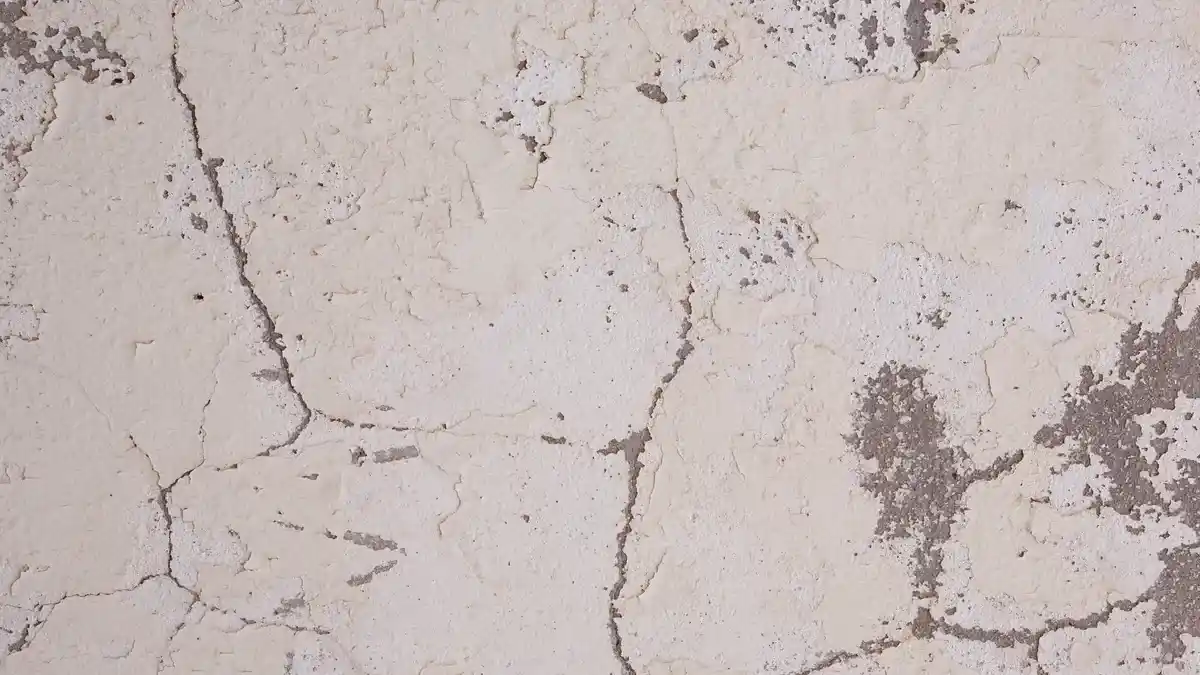
Carbon fiber straps for bowed basement walls fit a bowed basement wall when the wall is out of plumb but not failing in a way that makes bonding or restraint pointless. They are best for walls that show bowing, small cracks, or mild movement, not walls that are bulging hard enough to look unstable from across the room. A useful way to think about them is as a brake, not a jack.
The wall has to be strong enough to take the strap load through epoxy. That usually means the concrete block wall or poured concrete wall is sound, with no major section that is loose, crushed, or separated. If the wall is covered by an interior finish, that finish has to come off in the repair zone so the installer can reach the bare wall face and see what is really there.
Since the inward pressure from wet soil is still active in many basement cases, the strap may hold for a while, but the wall can keep trying to move. That is why a carbon fiber repair is often paired with crack repair, drainage work, or another method in the larger bowing basement wall repair methods plan. For practical design and repair context, consult a structural engineer or qualified foundation repair professional, and compare the work with the structural guidance in the International Code Council and the American Concrete Institute.
The fit question is not only about the wall shape. It is also about the repair goal. If the goal is to stop further inward movement and keep the wall from getting worse, carbon fiber can make sense. If the goal is to straighten the wall, that is a different job, and a strap alone is not the tool for it.
When do they not fit?
Carbon fiber straps do not fit a wall that is too far gone for the wall face to carry the load. If the wall has major inward displacement, large open cracks, crushed block faces, or obvious signs that the wall is still moving fast, a strap is the wrong first choice. In those cases, restraint without correction can leave a false sense of safety.
They also do not fit well when the wall surface cannot be bonded cleanly. Epoxy wants a dry, solid, clean substrate. Heavy paint, powdery concrete, flaking coating, or soft mortar joints get in the way. If the installer has to fight the surface before every strap, the repair loses reliability.
Another bad fit is a wall with poor moisture control. Carbon fiber does not fix wet soil pressure. If water is still loading the wall, or if interior finish materials hide ongoing leaks, the strap is only addressing part of the problem. The visible wall may look better while the cause keeps working behind it.
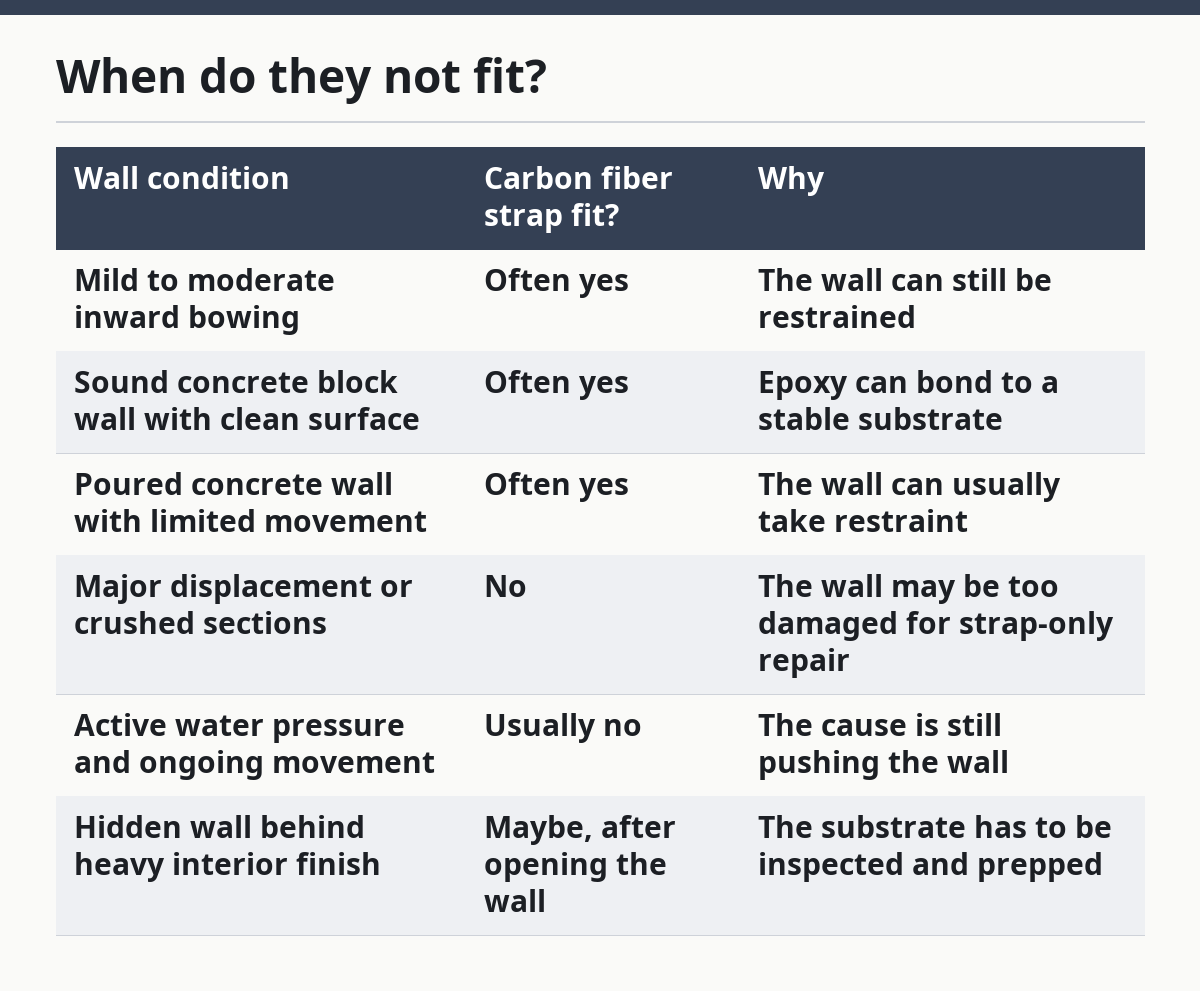
The table below helps sort fit from no-fit quickly.
| Wall condition | Carbon fiber strap fit? | Why |
|---|---|---|
| Mild to moderate inward bowing | Often yes | The wall can still be restrained |
| Sound concrete block wall with clean surface | Often yes | Epoxy can bond to a stable substrate |
| Poured concrete wall with limited movement | Often yes | The wall can usually take restraint |
| Major displacement or crushed sections | No | The wall may be too damaged for strap-only repair |
| Active water pressure and ongoing movement | Usually no | The cause is still pushing the wall |
| Hidden wall behind heavy interior finish | Maybe, after opening the wall | The substrate has to be inspected and prepped |
How is the wall checked before installation?

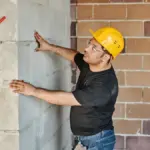
The wall is checked by looking for the condition that makes epoxy bonding and restraint possible before any strap goes on. Start with the crack pattern, the amount of bowing, the type of wall, and the condition of the surface. A concrete block wall needs a different judgment than a poured concrete wall, because block joints can fail in ways that a solid wall does not.
A practical check can be done in 5 steps:
- Expose the wall face in the repair area. Remove interior finish materials so the actual wall is visible. If a finished wall hides cracks, stains, or past patching, you cannot judge the repair correctly.
- Look for movement clues. Check for horizontal cracking, stepped cracks in block joints, bulging, and offset seams. These are signs that the wall is not only cracked but stressed.
- Check the surface condition. Dust, loose material, old coating, and wet spots reduce bond quality. The wall should be firm, clean, and ready for epoxy.
- Decide whether crack repair comes first. Small cracks often need sealing before straps go on, so the wall face is stable and the repair is not just bridging an open path.
- Measure the bowing against the repair goal. If the wall is only moving a little and still holds its shape well enough, a strap may fit. If the wall looks badly displaced, stop and choose another method.
Therefore, a good check is less about one magic number and more about judgment. If the wall looks like it needs to be pushed back into line before it can be restrained, straps alone are not the answer.
What surface prep does the epoxy need?
The epoxy needs a clean, dry, sound surface or the strap is only as good as the weakest patch under it. That is the biggest reason carbon fiber repairs fail on site and the easiest part to miss when a person sees only the finished black strip on the wall. The epoxy is doing the real work of attaching the strap to the foundation wall.
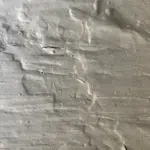
Prep usually means removing paint, loose mortar, dust, and anything flaky from the bond area. On a concrete block wall, the joints often need special care because the bond has to reach solid material, not crumbly edges. On a poured wall, the repair area should be free of laitance, sealers, and residue that can keep epoxy from grabbing.
A plain interior finish can hide bad prep, which is why finishing over a strap should wait until the repair is complete and inspected. If the wall is already painted or covered, the finish has to come off where the strap will bond. Leaving coatings in place can make the strap look installed while the bond beneath it is weak.
Moisture matters too. Wet wall conditions are a problem because epoxy does not like a damp, dirty surface. If water is still entering the wall, the repair should not be rushed just to get the strap on. A dry, prepared wall gives the epoxy its best chance to hold.
How much spacing and coverage makes sense?
Spacing and coverage are chosen to match the wall’s movement, not to make the wall look evenly decorated. Carbon fiber straps are usually placed where the wall needs restraint most, which means the layout should follow the stress pattern rather than a fixed decorative grid. A wall with one long inward area may need a different layout than a wall with several shorter problem zones.
The installer has to think about what each strap is trying to hold. One strap can restrain a limited area, but a longer bowed section may need more than one strap to keep the movement from continuing between bond points. Too much spacing leaves weak gaps; too little spacing can add cost without improving the result if the wall itself is already beyond what a strap-only repair can control.
Interior finish also affects spacing decisions. If a finished basement wall has framing, drywall, or other built-ins, those materials may limit where straps can go unless they are removed first. That is another reason to treat carbon fiber as a wall-system repair, not a surface patch.
The spacing question should never be separated from the condition question. A badly bowed wall does not become suitable just because more straps are added. If the wall needs direct structural correction, spacing is the wrong problem to solve.
What code and inspection issues can come up?
Code and inspection issues can come up because carbon fiber straps are a structural repair, not a cosmetic patch. A local building department may want to know what product is being used, how it is attached, and whether the wall condition is acceptable for that repair. Rules vary, so the repair should be judged against local requirements rather than a guess from a web photo.
The code issue matters most when the basement is finished or being finished. An interior finish can hide the condition of the wall and make later inspection harder, so the repair may need to be visible before it is covered. That is especially true when the wall has signs of active movement or previous patching.
Carbon fiber also sits inside a larger structural question: is the wall stable enough for restraint, or does it need a different method first? That is where professional judgment matters. For a reader comparing this option with other bowing basement wall repair methods, the important point is that straps fit a narrower set of wall conditions than many marketing pages admit.
For general code context, the International Code Council and the American Concrete Institute both publish standards and guidance relevant to structural repairs and concrete walls. A local inspector may not ask for those documents by name, but the repair should still follow the logic of sound structural practice and local approval.
What should make you stop and choose another repair?
You should stop and choose another repair when the wall is too damaged for restraint to be the whole answer. A wall with major inward movement, wide separation, crushed block faces, or ongoing water pressure is not a good candidate for a strap-only fix. In those cases, the strap may hide the symptom while the wall continues to fail behind it.
A bad fit also shows up when the wall cannot be prepped properly. If the wall face is damp, dirty, covered in failing coating, or hidden behind an interior finish that cannot be removed, the bond is suspect. Epoxy is not forgiving of shortcuts. The repair should wait until the wall surface is ready or a different method is chosen.
If the wall needs to be straightened, braced, or rebuilt before it can be safely restrained, carbon fiber is the wrong first move. That is the clearest line: straps hold movement in check, but they do not restore a wall that has already moved too far. A good repair starts with the wall’s actual condition, not the desire to use the smallest visible fix.
Can carbon fiber fix a badly bowed wall?
No, not by itself. Carbon fiber straps are meant to restrain a wall that is still sound enough to bond to and stable enough to hold load. If the wall is badly bowed, badly cracked, or still moving, another repair is usually needed first.
Are carbon fiber straps visible after installation?
Yes, they are usually visible as vertical or near-vertical strips on the wall surface. They can be left exposed or covered later as part of an interior finish plan, but they are not invisible once installed. That matters if the basement is used as living space.
Do they work on block walls?
Yes, carbon fiber straps can work on a concrete block wall when the block is sound and the surface is prepared correctly. They do not work well on loose joints, crushed block, or walls with heavy movement. The wall condition matters more than the wall type alone.
Drafted with AI; not yet reviewed by a person.